

A small-looking leak can become an urgent repair in a rental home. Handling rental property emergencies means acting quickly when a problem threatens someone’s health, safety, or security, or could cause serious property damage. Gas leaks, burst pipes, sparking outlets, and broken locks need immediate attention. Cosmetic damage or a minor drip that isn’t causing harm can usually wait for routine maintenance.
It’s not always obvious where that line falls, especially when a call comes in after hours. This guide explains how to recognize an emergency, what details help assess the situation, and which repairs may wait. Examples include heating failures in extreme weather and a clogged toilet, so you can choose an appropriate next step.
Key Takeaways
- Prioritize problems that threaten health, safety, security, or cause active property damage; routine cosmetic issues can usually follow normal maintenance channels.
- Calm, clear communication helps establish what’s happening, where it’s happening, and whether anyone is at immediate risk.
- Consider the conditions around the issue, including weather, available facilities, and whether damage is continuing, before deciding how urgently to respond.
- Recognize common urgent concerns such as gas leaks, electrical hazards, flooding, and compromised doors or windows, and take steps to reduce immediate risk.
1. What Maintenance Issues Are Emergencies and What Can Wait for Regular Business Hours?
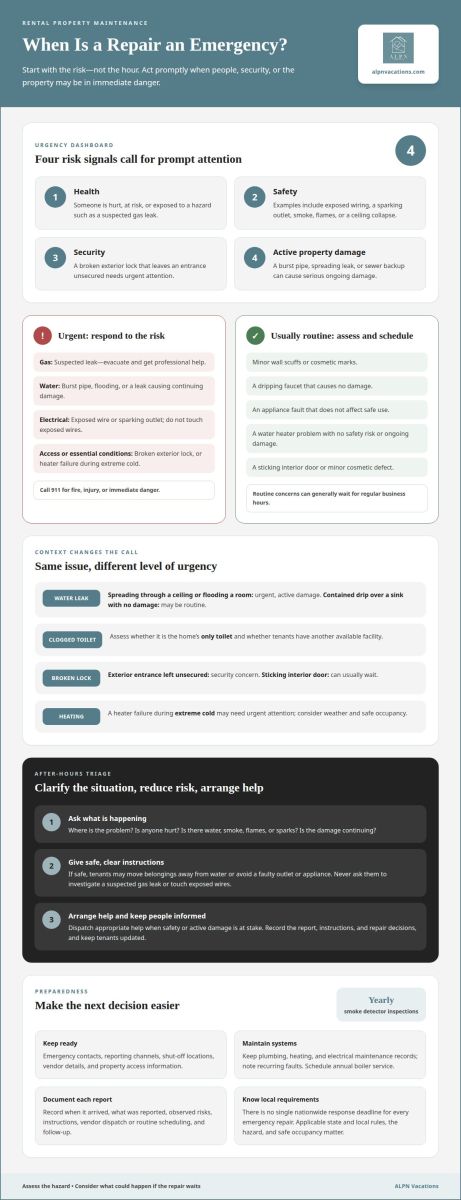
Start with the risk, not the hour. A gas leak, burst pipe, exposed wire, or broken exterior lock can threaten people or property and needs immediate attention. A dripping faucet that causes no damage, minor wall scuffs, or an appliance fault without a safety risk can usually go through routine maintenance. A water heater problem may not require immediate attention if it poses no safety risk and causes no ongoing damage.
State law does not set one nationwide response deadline for every emergency repair. Applicable state and local rules, the hazard, and the effect on safe occupancy determine the required response. Owners should know the rules for each rental home and act promptly when a report describes immediate danger or ongoing damage.
Calm communication helps clarify what’s happening. Ask tenants where the problem is, whether anyone is hurt, and whether there’s water, smoke, flames, or sparks. For a leak, ask whether they can safely reach the water shut-off. Record the answers, give a clear next step, and keep tenants updated as help is arranged.
Tenants should report problems as soon as they arise and describe visible damage. If safe, they can move belongings away from water and avoid using a faulty outlet or appliance. Never ask tenants to touch exposed wires or investigate a suspected gas leak. A suspected gas leak calls for evacuation and professional help; call 911 for fire, injury, or immediate danger.
Set expectations before a late-night call. A welcome packet can list emergency contacts, reporting channels, shut-off locations, and steps for urgent issues. Keep plumbing, HVAC, and electrical vendor details current. Explain in the tenancy agreement how to report repairs and distinguish urgent hazards from routine requests, while following applicable law.
For after-hours triage, acknowledge the report, assess immediate risks, and arrange help when safety or active damage is at stake. A heater failure during extreme cold or a broken lock may need urgent attention. A minor cosmetic issue can generally wait for regular business hours.
2. Identifying true maintenance emergencies
Handling rental property emergencies starts with assessing the reported condition, its immediate effects, and whether damage is continuing. A burst pipe, sewer backup, gas leak, exposed wiring, or sparking outlet signals urgent risk. Ask where the issue is, what has changed, and whether anyone is in danger. A water heater leaking above a finished room may cause more harm than one leaking into an unfinished basement. Location matters, as does whether water or another hazard is spreading.
Prevention makes urgent problems easier to recognize. Keep maintenance records for plumbing, heating, and electrical systems, and note recurring faults rather than treating each report in isolation. Schedule yearly smoke detector inspections and annual boiler service to catch potential issues before a failure. Repeated drain backups, for example, can point to a problem that needs investigation, even when the latest report seems minor. Preventive work also gives property managers a clearer picture of each home’s condition.
Screen emergency maintenance vendors before a crisis. Assess their reliability, responsiveness, and workmanship, and choose professionals experienced in the relevant repair, such as plumbing, electrical, or HVAC work. Set clear expectations about the response, the work’s scope, and how updates will be shared. Keep vendor details and property access information together so the person coordinating a repair can pass along useful details without delay.
A consistent process for handling rental property emergencies distinguishes urgent hazards from routine concerns. Minor cosmetic marks, a dripping faucet that causes no damage, or an appliance fault that doesn’t affect safe use can usually wait for business hours. A clogged toilet needs closer assessment if it’s the home’s only toilet. For each report, record the condition, its effect on tenants, and why the response fits the risk. That record helps property teams make consistent decisions across homes.
3. What counts as an emergency repair?
An emergency repair addresses a threat to health, safety, security, or the property. A burst pipe flooding a room, gas leak, sparking wiring, or collapsed ceiling requires prompt action. A noisy appliance or small cosmetic defect usually belongs in routine maintenance unless it creates danger or ongoing damage. The key question is what could happen if the repair waits.
Can tenants arrange emergency repairs and deduct the cost from rent? Only if applicable state and local law allow it and required procedures are followed. Tenants shouldn’t assume they can hire a contractor and subtract the bill. Landlords should set clear reporting steps and seek legal advice when obligations are uncertain.
To distinguish an emergency from a routine repair, assess the immediate hazard, whether damage is ongoing, and how essential the affected system is. A leak spreading through a ceiling is different from a dripping faucet contained over a sink. A broken lock that leaves an entrance unsecured raises a safety concern; a sticking interior door may wait. The same fault can have different urgency depending on its location and impact.
Document each call from the first report. Record when it arrived, the tenant’s description, observed risks, instructions given, and whether you dispatched a vendor or scheduled routine work. For a burst pipe, note when the water was shut off and when the repair began. Keep messages, tenant photos, invoices, and follow-up notes together in the property record.
Set spending limits before an urgent call, not during one. Define who can authorize a vendor, which repairs qualify for immediate approval, and when owners must be contacted. Agree on a scope for stabilizing active damage, then document any additional work for approval. Don’t assume every emergency requires a full replacement. A temporary repair may stop immediate harm while a permanent fix is arranged.
Review the timeline after the repair. Note arrival, work performed, remaining risks, and updates to the tenant. These details help landlords explain the response and identify recurring problems, such as repeated plumbing leaks, that may need broader maintenance.
4. Common rental property emergencies
Water emergencies often spread beyond the room where they begin. A failed supply line can soak flooring, cabinets, and the ceiling below; a sewer backup can bring contaminated water into living areas. If flooding is active, stopping the water at a safe shut-off can limit further damage. If the source can’t be stopped, arrange prompt professional help and keep people away from affected areas.
Electrical emergencies include exposed wiring, sparking outlets, burning smells, or a sudden power problem linked to damaged equipment. Tenants shouldn’t touch wires or use a sparking outlet. The property owner should treat these situations as urgent, keep people clear of the hazard, and arrange an assessment by an electrical professional. A light that simply needs a bulb doesn’t present the same warning signs.
Heating and cooling failures become more serious when the weather creates dangerous indoor conditions. A broken heater during severe cold can put occupants at risk, while failed cooling during extreme heat can make rooms unsafe, especially for vulnerable residents. A system failure in mild weather may be less urgent. Consider the indoor conditions, who’s affected, and whether safe shelter remains available.
Security and structural damage also call for prompt attention. A broken exterior window can leave a home exposed; boarding it temporarily can secure the opening while replacement is arranged. A malfunctioning entry lock raises a similar concern. A sagging ceiling, fallen plaster, or newly cracked wall may signal damage that requires people to avoid the area until it’s assessed.
For emergency maintenance, describe the visible hazard and its location, then say whether it’s worsening. A photo can clarify a damaged window or spreading leak, but tenants shouldn’t approach smoke, exposed electrical parts, or unstable structures to take one. These examples show why the same repair category can carry different urgency: an isolated fault may wait, while active danger or damage needs immediate action.
ALPN Vacations: Vacation Rental Management Services
ALPN Vacations offers Vacation Rental Management Services for owners seeking support with their vacation rental properties. After defining which issues require urgent attention and establishing clear repair procedures, management services can be a natural next step for owners who want help overseeing a rental. The right fit depends on the property and the support the owner needs.
ALPN Vacations offers stays including Alpenglow Cabin – Rustic Mountain Retreat, Amphitheater Haus, and Ouray Main Street Luxury Penthouse. These properties offer different vacation rental options in the region, while the management service supports owners considering professional oversight of their own rental. For an active safety threat, follow the appropriate emergency steps first. Management planning is not a substitute for immediate action.
If you’re considering vacation rental management, contact ALPN Vacations to discuss your property and needs.
Build a steadier plan for your rental
A clear emergency plan gives owners and tenants a shared starting point when an unexpected problem interrupts a stay. Make that plan part of how the property is managed: keep communication straightforward, record decisions, and tailor repair procedures to the home and its guests. Thoughtful handling of rental property emergencies supports a more prepared, well-cared-for rental experience.
For owners considering professional oversight, ALPN Vacations provides Vacation Rental Management Services. Its rental options include Alpenglow Cabin – Rustic Mountain Retreat, Amphitheater Haus, and Ouray Main Street Luxury Penthouse. Each offers a different setting for a stay in the region, while management services support owners seeking help with their vacation rental.
Contact ALPN Vacations for help exploring whether its vacation rental management services fit your property. A considered plan can make the next decision feel clearer and the experience more welcoming for everyone involved.
Frequently Asked Questions
What is considered rental property emergency maintenance?
Emergency maintenance addresses an immediate threat to occupants or the home. A sewage backup entering a living area or a ceiling that suddenly gives way are examples. For owners handling rental property emergencies, the affected room and whether people can safely remain there help determine the next step. Keep the report focused on what’s happening now.
What counts as an emergency repair?
An emergency repair stabilizes a dangerous or damaging situation; it may not complete every restoration task. For example, after a storm breaks a window, securing the opening can come before installing a replacement. Record what work addressed the immediate condition and what remains. This distinction helps owners track follow-up repairs without treating every later improvement as equally urgent.
What Maintenance Issues Are Emergencies and What Can Wait for Regular Business Hours?
Emergencies involve immediate risk, active damage, or a major loss of safe use. A loose cabinet handle or cosmetic scratch can usually enter the routine repair queue. Consider the home’s layout and available alternatives: a failed refrigerator may be more disruptive if it’s the only way to store essential food. Set priorities by impact, not simply by repair category.
What should tenants do first during a rental emergency?
Tenants should move to safety before documenting or reporting a hazard. If there’s a fire or injury, call emergency services; for suspected gas, leave the building and call the gas company from outside. Once safe, tell the property contact where the problem is, what happened, and whether it’s worsening. Don’t attempt repairs involving gas, electricity, or unstable structures.
How should landlords handle after-hours emergency calls?
Landlords should establish the immediate risk, explain a clear next step, and record the call. A written log makes handling rental property emergencies more consistent: include the caller’s description, the affected space, instructions given, and any vendor dispatch. If the situation changes while help is being arranged, update the record and tell occupants which areas or equipment to avoid.
Who pays for emergency repairs in a rental property?
Payment responsibility depends on the repair, its cause, the rental agreement, and applicable law. A failed building pipe, for example, differs from damage caused by a tenant’s actions. Keep the vendor’s findings and repair documentation with the property record, then determine responsibility using the lease and relevant rules. Tenants shouldn’t assume they can deduct a repair bill from rent without legal authority.