
Short-term rental ownership can generate attractive income, but it also brings operating costs, changing demand, local rules, and guest-related liability that can affect returns. The risks of short term rental ownership go beyond vacant nights: owners must keep the property safe, insured, and compliant while welcoming a steady flow of guests.
It’s worth weighing potentially higher nightly rates against the work and uncertainty involved. This article explains how revenue and expenses affect returns, why permits and occupancy rules matter, and where insurance and liability risks can arise. You’ll get a clearer view of the tradeoffs, including when a short-term rental may not suit your financial goals or capacity to manage a property.
Key Takeaways
- Assess projected income alongside turnover, cleaning, maintenance, and seasonal demand to understand how operating demands can affect returns.
- Consider how guest use of the home and off-property equipment could create safety and liability exposure.
- Review local permit, zoning, and occupancy requirements before relying on a property’s rental potential.
- Understand how insurance coverage and hands-on management affect ownership, and where vacation rental management may help with day-to-day demands.
Are Vacation Rental Properties Good Investments?
A vacation rental may earn higher nightly rates than a long-term lease, but returns depend on occupancy and active oversight. Assess income alongside turnover, maintenance, vacant nights, and guest safety.
Guest Turnover and Vacancy Exposure
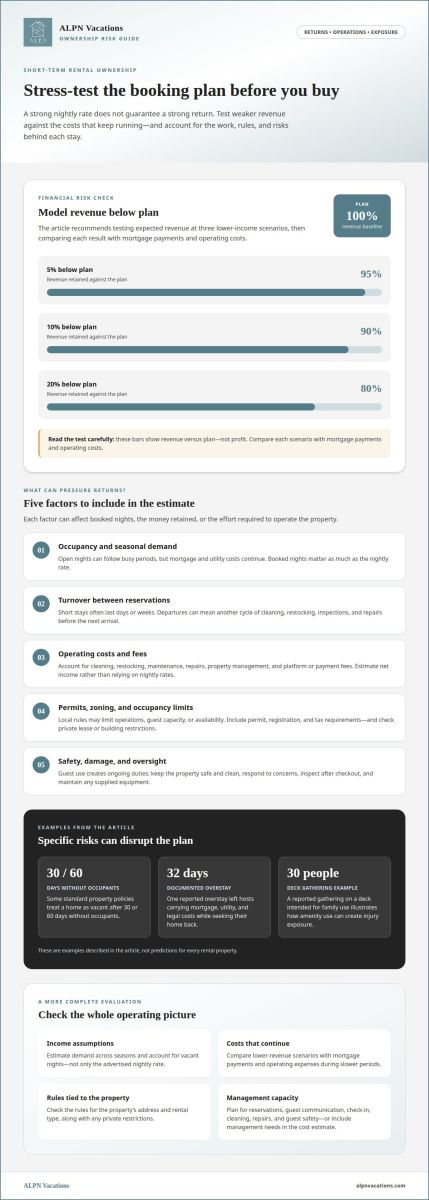
Frequent turnover means each departure starts another service cycle. Short-term stays often last days or weeks, so cleaning, restocking, and repairs can consume time and income between reservations. Seasonal demand may leave open nights after busy periods, while mortgage and utility costs continue. Some standard property policies treat a home as vacant after 30 or 60 days without occupants. A listing’s booked nights matter as much as its nightly rate.
Safety, Damage, and Sanitation
An owner’s practical duty of care includes maintaining a safe, clean property and responding to guest concerns. Each checkout is also an opportunity to inspect for damage, clean thoroughly, restock supplies, and handle repairs before the next arrival.
Operating Costs and Profit Margins
Common operating costs include cleaning between stays, restocking, maintenance, repairs, and property management. Platform or payment fees may also reduce the amount retained, so calculate net income rather than relying on nightly rates. No single profit margin applies to every rental: occupancy, seasonal demand, expenses, and management needs all shape returns. Cleaning, maintenance, and property management costs may be deductible, but tax treatment depends on the owner’s circumstances.
Financial Risk and Property Evaluation
The biggest financial risks include weaker-than-expected bookings, rising operating demands, and seasonal revenue swings. The risks of short term rental ownership are easier to assess when projections include lower-income scenarios. Stress-test expected revenue at 5%, 10%, and 20% below plan, then compare each result with mortgage payments and operating costs. Before buying, estimate demand across seasons, account for turnover and repairs, and assess whether the property can still carry its costs during slower periods.
Short-Term Rentals: Worth the Risk?
A short-term rental can be a worthwhile investment, but bookings aren’t the only measure of risk. Platform changes, guest incidents, and property oversight can affect both income and the time ownership requires.
Operational Complexity and Management
Managing a rental property means coordinating reservations, guest communication, check-in, cleaning, and repairs. Each handoff creates work: a late arrival may require updated instructions, while damage discovered after checkout can delay the next stay. A documented overstay lasted 32 days, leaving hosts responsible for mortgage, utility, and legal costs while seeking their home back. A clear management plan helps keep these demands organized. For owners considering that workload, rental management support can be part of the operating approach.
Amenity and Off-Property Injury Risks
Pools, decks, and recreational equipment can expose owners to injury claims, especially when guests use amenities beyond their intended capacity. One reported example involved 30 people gathering on a deck intended for family use. Risks can also extend beyond the home when guests use equipment supplied for outdoor activities. Keep an inventory of property equipment and record its condition before and after stays; clear instructions and maintenance help address foreseeable hazards.
Payments, Damage, and Platform Changes
Payment and damage risks differ between short stays and longer tenancies. Long-term tenants may pay late, damage a property, or violate lease terms; resolving serious issues can require costly legal action. Short-term hosts manage repeated guest turnovers, and missing items or damage may only come to light after checkout. Platform policies, fees, and reviews can also affect booking income: policy changes may alter how a listing operates, fees reduce net receipts, and reviews can influence future bookings. A poor guest experience, for instance, may lead to a review that affects another traveler’s decision. Treat platform income as one part of the investment, not a guaranteed return.
Short-term rental permits, occupancy limits, and zoning
Short-term rental rules depend on the property’s location and any restrictions that apply to it. In Ouray, distinguish local requirements from private building or lease limits before estimating how often a property can be rented.
Local Regulations and Permits
Local regulations may require a vacation rental permit, limit operations, or require additional tax collection. Rules can vary between nearby jurisdictions, so a general estimate cannot determine whether a specific property can operate as planned. For an Ouray investment, identify the rules that apply to the property’s address and rental type before projecting income.
Permit restrictions can limit how often a home is available to vacation guests, while cleaning and other operating expenses continue. Include registration, permit, and tax requirements in your operating assumptions. This gives a more realistic picture of potential rental activity than treating every night as bookable.
Occupancy Limits, Zoning, and Registration
Zoning and occupancy rules can determine where a short-term rental may operate and how many guests it can accommodate. Registration requirements may add further conditions. These limits matter because they can affect both the property’s permitted use and the bookings it can support.
Long-term rentals generally rely on lease terms defining the tenancy period and the rights and duties of tenants and landlords. Short-term rental rules may instead address permits, zoning, occupancy, and taxes. Building leases or occupancy agreements can also prohibit short stays, regardless of a property’s broader rental potential. For an Ouray property, account for both local rules and private restrictions before relying on projected rental income or planning guest capacity.
Short-term rental liability risks
Liability risks can stem from guest injuries, property conditions, privacy concerns, or gaps in insurance. In the United States, there is no single national stay-length threshold for when a guest gains tenant rights; the threshold varies by state.
Liability Exposure
Liability exposure means an owner may face claims related to harm at a rental. These business risks go beyond lost revenue. Personal home policies typically exclude business exposures similar to short-term rentals, and coverage may limit protection for injuries, vacancies, or home contents. Owners with multiple rentals may need commercial coverage. Check that an umbrella or excess liability policy covers rental activity.
Privacy is another risk to consider. Limit cameras to the front door and driveway, aimed at public spaces, and don’t place them elsewhere. Clearly disclose what guests can expect to avoid surprises. The property setup, guest expectations, and policy terms all shape potential exposure.
Damage, Theft, and Guest Safety
Damage, theft, and unsafe conditions can affect guests and a rental’s value. A guest could be injured by a loose railing, an obstructed walkway, or a poorly maintained outdoor feature. Missing furnishings or equipment can also disrupt an upcoming booking. Keep an inventory of rooms and supplied items, then document their condition between stays. This creates a practical record for spotting changes and arranging repairs.
Safety checks should cover the full guest experience, from arrival paths to shared amenities. Look for hazards that may be harder to spot in changing weather, and provide clear instructions for using property features safely. Understand whether your insurance covers guest injuries, damage, vacancies, and contents.
Before purchase, review policy exclusions and discuss coverage gaps with an insurance broker. Confirm that any umbrella or excess liability policy covers rental activity, and consider separate coverage for rental business activities. If property oversight and guest safety are stretching your capacity, discuss vacation rental management with ALPN Vacations.
ALPN Vacations: Vacation Rental Management Services
ALPN Vacations provides Vacation Rental Management Services for owners who want help managing the demands of a short-term rental. Management support can be a natural next step when guest coordination, property upkeep, and booking responsibilities compete with your time, or when you’re weighing the work behind potential returns.
Good management is part of the investment decision, not a substitute for understanding local rules, insurance coverage, and operating costs. Consider whether professional support fits your ownership goals and desired level of involvement. ALPN Vacations also offers a diverse portfolio of exceptional local properties designed to provide guests with comfortable and memorable stays.
To discuss Vacation Rental Management Services in Ouray, contact ALPN Vacations.
Choose an Ownership Approach That Fits
The risks of short term rental ownership are easier to assess when your investment plan reflects the involvement you’re prepared to sustain. Before committing, consider the property’s potential and whether hosting responsibilities fit your time, priorities, and appetite for uncertainty. A clear ownership plan can keep the decision grounded in what works for you.
If hands-on coordination feels like a poor fit, professional vacation rental management may be a useful next step. Discuss your goals and ownership questions with Contact ALPN Vacations.
With thoughtful planning and support from a local Ouray management team, you can make an ownership decision that feels clear, considered, and well suited to your goals.
Frequently Asked Questions
What If Your Setup Adds Risks of Its Own?
A property’s layout and features can create hazards that booking figures won’t reveal. A narrow stairway, uneven path, or confusing entry process may make arrival difficult for guests. Walk through the guest journey from parking to sleeping areas, noting potential trouble spots and unclear instructions. Include seasonal access and maintenance needs in your review, especially for homes with outdoor areas or features guests use independently.
What Risks Come from Constant Guest Turnover?
Frequent arrivals and departures can leave little time to catch small problems before the next stay. A loose handle or missing kitchen item, for example, may go unnoticed if cleaning and inspection are rushed together. Use a consistent turnover record that separates cleaning from condition checks. This makes recurring issues easier to spot and helps show whether there’s enough time to prepare the property carefully.
What Risks Come from the Amenities You Provide?
Every amenity creates expectations about its condition and use. A fireplace, grill, or outdoor seating area may need clear instructions and regular attention before guests arrive. Place instructions near the feature, and make sure listing descriptions match what guests will find. If an amenity becomes unavailable, update the information promptly so guests aren’t expecting something the property can’t provide.
What Risks Come from the Hospitality Duty of Care?
Hospitality means paying attention to guests’ experience, not just providing access. If someone reports a hazard, unclear instructions, or a problem affecting their stay, a delayed response can let the issue worsen. Use a reliable process to receive concerns, record what happened, and arrange appropriate follow-up. Clear communication helps guests know what to expect and supports consistent care.
What Risks Come from the Strangers Themselves?
Guests you haven’t met may use a home differently than expected, creating risks such as unauthorized visitors, noise, or access to private areas. Set clear expectations before arrival, including which spaces are available and how guests should report concerns. Consistently documenting reservation details and reported issues can help distinguish misunderstandings from repeated behavior that needs attention.
How do seasonality and vacancy affect short-term rental income?
Seasonality can shift demand, making some periods busier and others quieter. For an Ouray property, compare expected bookings across travel seasons instead of projecting income from peak dates alone. Vacant nights reduce rental receipts while ownership expenses continue. Account for slower periods in your projections, and consider how a longer gap without occupants could affect the property’s insurance terms.