
What if avoiding bad guests in vacation rentals had less to do with spotting a “type” of traveler and more to do with setting clear, consistent expectations? Concerns about damage, unauthorized visitors, parties, or noise are understandable. So is the worry that enforcing a rule could turn a difficult moment into a poor review. But assumptions about who might cause trouble can be unfair, and they’re no substitute for thoughtful, behavior-based decisions.
A calmer approach starts before check-in. Clear house rules, consistent booking procedures, and welcoming communication help guests understand how to care for the home and enjoy their stay. When a concern does arise, a measured response can help protect the property without making a guest feel unwelcome.
This guide explains how to assess booking concerns fairly, set expectations that are easy to follow, and respond to problems with care. You’ll also learn how to document incidents and communicate calmly, so you can protect your rental while preserving the comfortable, memorable experience guests came for.
Key Takeaways
- Avoiding bad guests in vacation rentals starts with clear expectations and decisions based on specific behavior, not assumptions about a traveler.
- Use a consistent booking review process to compare reservation details with your listing, occupancy limits, house rules, and platform procedures.
- Choose practical safeguards, from accurate listing details to written rules and inventory records, while considering their purpose and the guest experience.
- If a rule is broken, prioritize safety, document what happened, communicate calmly, and choose a proportionate next step.
- Consistent reservations, guest communication, and property-care coordination can make hosting smoother. ALPN Vacations provides vacation rental management from Ouray, Colorado.
Avoiding bad guests in vacation rentals starts with clear, fair expectations
It’s reasonable to worry about property damage, unauthorized visitors, parties, or noise. A single difficult stay can disrupt the calm experience you’ve worked hard to create. But problems aren’t inevitable, and a guest’s identity isn’t a reliable way to predict how they’ll treat a home. Focus instead on specific conduct: breaking stated rules, exceeding the agreed occupancy, or causing damage.
Effective prevention combines clear expectations with consistent responses. Explain how the property works before arrival and apply the same standards to each reservation. A short-term rental offers a different setting from a traditional hotel, often with more responsibility resting on guests to follow home-specific guidance. Clear communication makes those expectations part of a welcoming stay, not a surprise at the door.
What counts as a warning sign during a booking?
Look at the request, not the person making it. A proposed group larger than the listing’s stated occupancy, or a request to hold an event that the listing doesn’t allow, calls for clarification. Neither automatically proves a guest will cause trouble. One unusual question may simply reflect a misunderstanding. Reply politely, restate the relevant rule, and note whether the guest accepts it.
Why guest stereotypes are a poor screening method
Families, pet owners, younger travelers, and guests with different occupations aren’t inherently risky. Treating any group as a warning sign can lead to inconsistent decisions and make respectful guests feel unwelcome. Instead, use the same written criteria for everyone: whether the booking details fit the listing, whether the guest understands the rules, and whether communication stays consistent with those expectations.
This guide takes a practical path through avoiding bad guests in vacation rentals: setting expectations, reviewing bookings fairly, responding calmly when conduct becomes a concern, and recognizing when to seek help. The aim isn’t to eliminate every uncertainty. It’s to make decisions based on observable behavior, keep a clear record of what happens, and protect both the home and the guest experience.
How to screen vacation rental bookings using consistent, behavior-based steps
A repeatable review keeps booking decisions grounded in the reservation, not a hunch. A fair screening decision rests on consistent, relevant criteria applied to every booking. Use this workflow to confirm the stay details, resolve mismatches, and keep a clear record before arrival.
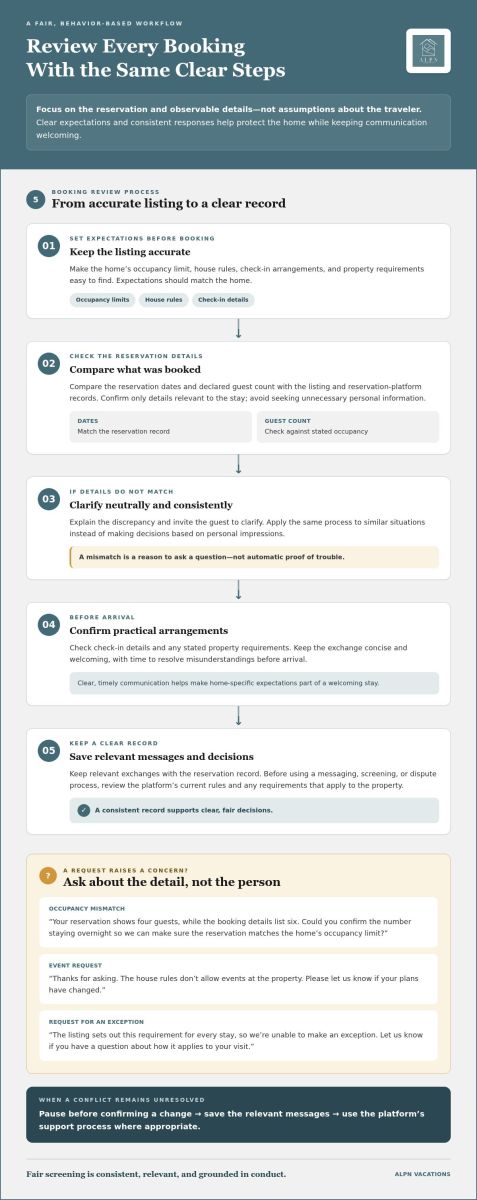
- Step 1: Keep the listing accurate. Make occupancy limits, house rules, check-in arrangements, and property requirements easy to find. Guests can make informed plans when the expectations match the home.
- Step 2: Review the reservation. Compare the dates and declared guest count with the listing and reservation-platform records. Confirm only information that’s relevant to the stay, and avoid seeking unnecessary personal details.
- Step 3: Clarify discrepancies neutrally. If a booking detail conflicts with the agreed terms, explain what you see and invite the guest to clarify. Apply the same process to similar situations rather than making exceptions based on personal impressions.
- Step 4: Confirm practical arrangements. Check check-in details and any stated property requirements. Keep the exchange concise and welcoming, with enough time to address misunderstandings before arrival.
- Step 5: Document the exchange. Keep relevant messages and decisions with the reservation record. Before using a particular messaging, screening, or dispute process, review the platform’s current rules and any requirements that apply to your property.
How to handle concerning requests without escalating
Ask about the booking detail, not the guest’s character. A calm, specific question gives the guest room to explain and creates a clear record of the answer.
- Occupancy: “Your reservation shows four guests, while the booking details list six. Could you confirm the number staying overnight so we can make sure the reservation matches the home’s occupancy limit?”
- Event: “Thanks for asking. The house rules don’t allow events at the property. Please let us know if your plans have changed.”
- Rule exception: “The listing sets out this requirement for every stay, so we’re unable to make an exception. Let us know if you have a question about how it applies to your visit.”
Keep communication on the reservation platform when its current policies support doing so. If an answer leaves a material conflict unresolved, pause before confirming any change, save the relevant messages, and use the platform’s support process where appropriate. For legal context, review the U.S. Department of Justice’s information on the Fair Housing Act and determine which requirements apply to your situation. Consistent reservations and guest communication can be easier to coordinate with vacation rental management in Ouray. ALPN Vacations coordinates reservations, guest services, and property care locally.
Compare the safeguards that help protect a vacation rental
No single measure can prevent every problem. A well-kept listing, clear written expectations, useful records, and steady communication work together to reduce confusion and help you respond consistently. Each safeguard has limits, too. The best approach protects the home without making an ordinary stay feel like a list of warnings.
House rules, agreements, and accurate listing details
State key expectations before a guest books, then keep them consistent across the listing and any reservation documents. Concise rules can cover occupancy, quiet hours, visitors, smoking, pets, and checkout. Avoid adding restrictions as a surprise after arrival. Owners who want help coordinating reservations, guest communication, and property care can explore this Ouray vacation rental management guide.
| Safeguard | Purpose and best use | Limitations | Guest experience |
|---|---|---|---|
| Accurate listing | Sets clear expectations about the home, occupancy, amenities, and restrictions before booking. | Must be kept current; vague or missing details invite mismatched expectations. | Supports an informed booking and fewer surprises. |
| Written house rules | Explains practical standards for visitors, quiet hours, pets, smoking, and checkout. | Rules work best when specific, reasonable, and consistently applied. | Gives guests a clear guide to caring for the property. |
| Reservation agreement | Records relevant terms alongside the booking, where the platform’s process allows. | Must align with platform terms and applicable requirements; it can’t replace clear communication. | Can make responsibilities easier to understand when presented before arrival. |
| Inventory and condition records | Dated notes or photos can establish the property’s condition and support maintenance follow-up. | Records need a consistent process and don’t by themselves determine responsibility for damage. | Usually unobtrusive when handled as part of property care. |
| Communication procedures | Provide a consistent way to share instructions, clarify questions, and record relevant exchanges. | Messages don’t substitute for clear rules or platform procedures. | Helpful, timely guidance makes a stay feel more considered. |
| Deposits or monitoring | Financial safeguards may address certain risks; disclosed monitoring may serve a defined property purpose. | Deposits and claims depend on platform terms and local requirements. Monitoring raises privacy and disclosure concerns. | Unexpected charges or undisclosed devices can undermine trust. |
Property records, deposits, and monitoring considerations
Keep dated condition records and document maintenance or reported damage through the same process each time. Deposits, claims, and evidence requirements vary, so review current platform procedures and applicable local rules before relying on them. The North Carolina Real Estate Commission’s Owning Vacation Rental Property Brochure offers a general overview, but its guidance is specific to North Carolina and shouldn’t be treated as a substitute for requirements that apply to an Ouray property.
Don’t use covert monitoring. Before discussing or installing any device, review current platform policies and relevant privacy rules, and follow applicable disclosure requirements. Layered, transparent safeguards make avoiding bad guests in vacation rentals less about suspicion and more about clear expectations, good records, and a stay that feels welcoming from the outset.
What to do when a vacation rental guest breaks the rules
A clear, measured response can keep a difficult moment from becoming more confusing. Start with safety, then establish what’s known, communicate the relevant expectation, and choose a proportionate next step. If there’s an immediate threat or urgent safety concern, contact the appropriate emergency services. Don’t delay urgent help while trying to resolve the issue through messages.
State the observed issue, cite the agreed rule, and request a clear action. This keeps the conversation focused on what needs to change, rather than on blame or assumptions about intent.
How to address noise, extra visitors, or property concerns
When circumstances allow, give the guest a reasonable opportunity to clarify or correct the issue. Keep your message brief, factual, and courteous. For example: “We’ve received a report of noise after the quiet hours stated in the house rules. Please lower the volume now so neighbors can enjoy a peaceful evening.” For visitors: “The reservation and house rules set the permitted occupancy. Please confirm who is at the property and ensure the stay remains within that limit.”
If the concern continues, communication breaks down, or you’re unsure what action is permitted, document the exchange and use the booking platform’s current support process. Don’t make threats or promise a particular outcome. Platform procedures and individual circumstances vary, so review the applicable process before changing a reservation or ending a stay.
How to document a complaint and protect the guest experience
Create a factual timeline while details are fresh. Record dates and times, messages, relevant platform communications, photographs of reported damage, and the steps you took. Keep original evidence intact; don’t edit images or embellish descriptions. Distinguish what you directly observed from what a guest or neighbor reported and what remains uncertain.
For example, write “neighbor reported loud music at 10:15 p.m.” rather than presenting an unverified report as something you witnessed. This distinction supports a fair review of the situation and helps keep emotion from shaping the record. Apply the same response standards to every guest, and check current platform procedures before submitting a complaint or evidence.
Calm communication doesn’t guarantee a favorable review, and enforcing a reasonable rule may still disappoint a guest. Focus on a respectful resolution and a well-documented process rather than trying to control someone else’s response. Consistent guest communication and attentive property-care coordination can help owners manage issues with care. Explore vacation rental management support for help coordinating reservations, guest services, and property care.
When vacation rental management can make guest issues easier to handle
Clear expectations are easier to maintain when reservations, guest communication, and property care follow a consistent process. For owners, that can mean fewer details to juggle between bookings and a more organized way to share stay information, coordinate upkeep, and respond when questions arise. Management can support that structure, but it can’t guarantee that damage or rule violations won’t happen.
ALPN Vacations is a locally owned and operated vacation rental management company based in Ouray, Colorado. Its work includes reservations, guest communication, maintenance coordination, and housekeeping oversight for short-term rentals in Ouray and the surrounding Southwest Colorado region. Local coordination connects reservation details with the care needed to prepare a home for the next arrival.
What consistent guest support looks like in practice
Reservations provide a starting point for sharing accurate stay details. Clear guest communication sets expectations before arrival and gives guests a way to raise questions during their stay. Between bookings, maintenance coordination and housekeeping oversight support property readiness. Together, these responsibilities create a steadier hosting process, though they can’t promise a particular screening result, prevent every incident, or determine how a guest will review the stay.
That consistency matters when concerns arise. A host or management team can refer back to the reservation, the information shared with the guest, and the property-care record. It’s a practical foundation for understanding what happened and choosing a measured response, rather than relying on memory or hurried assumptions.
A practical next step for Ouray-area rental owners
Start by identifying where hosting feels hardest to manage. Is it keeping booking details and guest messages organized, coordinating maintenance and housekeeping, or deciding how to respond when a concern comes up? Naming the pressure point can help you see whether additional management support would make daily operations more manageable.
For a closer look at the region’s mountain stays and property context, explore this Ouray cabin rental guide. If coordinating reservations, guest communication, and property care is taking more attention than you’d like to give, professional management can be a practical option. Thoughtful systems won’t remove every uncertainty, but they can help make expectations and responsibilities clearer for owners and guests alike.
Explore ALPN Vacations and its local vacation rental management services for Ouray and the surrounding Southwest Colorado region.
Build a calmer, more consistent hosting experience
A reliable approach to avoiding bad guests in vacation rentals begins with clear expectations and fair, behavior-based booking decisions. Accurate listing details and practical safeguards help guests understand how to care for the home, while calm communication and factual records give you a steady way to respond if concerns arise.
Hosting well doesn’t mean predicting every problem. It means having thoughtful procedures in place and knowing where support can help. ALPN Vacations is locally owned and operated in Ouray, Colorado, with management services that include reservations, guest communication, maintenance coordination, and housekeeping oversight.
If coordinating bookings and property care is taking more of your attention, explore ALPN Vacations’ local vacation rental management services. With clear systems and attentive support, you can focus on creating a welcoming stay and caring for the home with confidence.
Frequently Asked Questions
How can I screen vacation rental guests without being discriminatory?
Apply the same written, booking-relevant criteria to every reservation. For avoiding bad guests in vacation rentals, compare declared occupancy and dates with the listing, confirm agreement to disclosed rules, and use only information required by the booking platform. Don’t infer risk from age, family status, occupation, pet ownership, or other personal traits. Legal and platform requirements can vary, so review current rules before adopting a screening practice for your Ouray rental.
What are red flags when booking a vacation rental?
A request to exceed the stated occupancy, hold an undisclosed event, or bypass a clearly disclosed rule merits calm clarification. Compare the booking with your listing terms and use the same response process you’d apply to any reservation. A question, short message, or unfamiliar travel plan alone doesn’t establish bad intent. Ask about the specific detail that conflicts with the booking, then consider the guest’s response rather than relying on stereotypes.
Can I refuse a vacation rental booking if I am concerned about the guest?
Follow the reservation platform’s current terms and applicable laws, and base decisions on relevant booking facts rather than protected traits or assumptions. Avoid treating concern alone as a sufficient reason to reject a reservation. Document the specific issue, communicate through the appropriate channel, and review the platform’s process before acting. If the rules or circumstances are unclear, seek guidance from an authoritative source familiar with the requirements that apply to your property.
How do I prevent parties in my vacation rental?
State occupancy limits, visitor rules, quiet hours, and event restrictions clearly before booking. Confirm reservation details consistently, then share arrival instructions that reinforce the expectations in a welcoming way. If a concern arises, communicate calmly, record relevant facts, and use the booking platform’s current support process when appropriate. These steps can reduce confusion, but no single safeguard can guarantee that a party won’t occur. Clear expectations help guests understand how to respect the home and its surroundings.
Should vacation rental hosts require a security deposit?
Deposit options and damage procedures depend on the booking platform, property setup, and applicable rules. Before collecting or describing a deposit, verify current requirements and communicate permitted terms before booking. A deposit isn’t a substitute for an accurate listing, clear house rules, dated property records, or a fair process for reviewing a claim. Hosts in Ouray should consider the rules relevant to their location as well as the platform’s current procedures.
What should I do if a vacation rental guest damages my property?
Document the property’s condition with dated records and preserve relevant guest messages and platform communications. Keep your account factual, notify the guest or platform through the applicable process, and follow current deadlines and evidence requirements. For an urgent safety or property concern, take appropriate immediate action. Don’t promise reimbursement or a particular claim result. Outcomes depend on the evidence, applicable platform policies, and the circumstances of the reported damage.
Can vacation rental hosts use cameras to monitor guests?
Monitoring devices raise privacy and disclosure concerns, and requirements may depend on location and booking-platform policies. Don’t use hidden cameras or assume a device is allowed without checking current rules. Verify requirements through authoritative sources, disclose any permitted devices as required, and consider less intrusive safeguards, such as clear house rules and documented communication. For an Ouray rental, review the requirements that apply locally and the platform’s current policies before making decisions about monitoring.