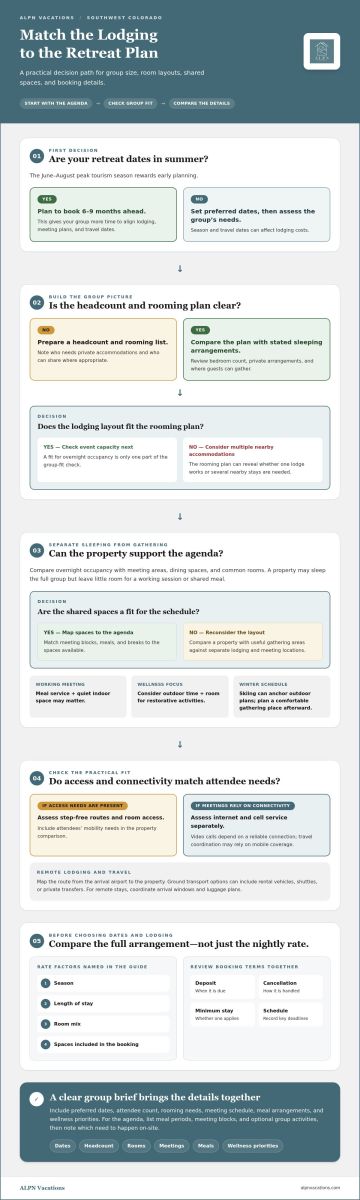
Summer dates reward early planning. For corporate retreat lodging in Southwest Colorado, book 6-9 months ahead for the June-August peak tourism season. That gives your group more time to align lodging, meeting plans, and travel dates.
It’s natural to focus first on the setting: mountain air, open landscapes, and a place where colleagues can step away from their usual routine. Practical details matter just as much. Group size, room arrangements, gathering spaces, and season all shape which retreat lodging fits your plans.
This guide explains what to consider when comparing group lodging near Ouray and elsewhere in Southwest Colorado, how seasonal demand can affect pricing, and what to look for in spaces for shared meals or team sessions. You’ll also find a clear starting point for choosing dates and planning ahead, so the experience feels considered from arrival through the final gathering.
Key Takeaways
- For summer retreats, plan well ahead: peak-season dates are best booked 6-9 months in advance.
- Match the lodging layout to your group’s headcount and room needs, then consider how the gathering space will support your agenda.
- Season, travel dates, and property choice all shape lodging costs, so compare options around your retreat’s priorities.
- Southwest Colorado retreat properties span elevations from 6,000 to 9,200 feet, a factor to consider when choosing activities and timing.
Custom retreat planning and group rates
Start with the retreat agenda, then match lodging, meals, and shared spaces to it. For summer dates in Colorado, plan to book 6-9 months ahead.
Group Amenities and Wellness
Catering, team-building activities, and wellness amenities vary by venue. Choose lodging by matching the available arrangements to your schedule, rather than assuming every property includes the same services. A working meeting may need meal service and a quiet indoor space, while a wellness-focused retreat may prioritize outdoor time and room for restorative activities.
Compare the amenities with each day’s plan. List meal periods, meeting blocks, and optional group activities, then identify which need to happen on-site. In winter, skiing can anchor an outdoor schedule, but the group still needs a comfortable place to gather afterward. This keeps amenities connected to the purpose of the retreat.
Lodging Coordination and Group Rates
Coordinating group lodging means aligning room assignments, arrival details, and shared spaces with the retreat agenda. Start with a headcount and a rooming list that notes each attendee’s needs. Then map arrival times, meeting sessions, and meals against the lodging layout. This makes room distribution and group movement easier to plan.
Group rates depend on factors such as season, length of stay, room mix, and the spaces included in the booking. Compare the full arrangement, not just the nightly rate: lodging with useful gathering areas may suit the schedule better than separate accommodations and meeting locations. When requesting a rate, provide your dates, group size, and agenda.
Booking and Stay Policies
Booking terms explain how a group reserves lodging, when a deposit is due, how cancellations are handled, and whether a minimum stay applies. Review these details together before choosing dates. Record the deposit schedule, cancellation deadlines, and stay requirements in the planning document so organizers can share consistent information with attendees.
Remote lodging also calls for practical access planning. Assess step-free routes and room access for attendees with mobility needs, then establish how the group will connect for meetings. Treat internet access and cell service as separate needs: video calls depend on a reliable connection, while travel coordination may rely on mobile coverage. Build the agenda around those requirements.
Before requesting group rates, prepare a concise brief with preferred dates, attendee count, rooming needs, meeting schedule, meal arrangements, and wellness priorities. This helps you compare lodging options on the details that shape the retreat, rather than on scenery alone.
Group lodging and guest room capacity
Choose accommodations by matching the guest count, room arrangement, and travel plan. In Southwest Colorado, mountain properties can be spread across separate buildings or located away from town. The setting can shape how guests connect, move between sessions, and reach shared spaces.
Corporate retreat lodging capacity depends on more than the number of beds. Compare overnight occupancy with the layout of meeting areas, dining spaces, and common rooms. A property may sleep the full group but leave little room for a working session or shared meal. Treat lodging capacity and event capacity as separate planning questions.
Build a rooming plan before selecting a property. List attendees, note who needs private accommodations, and group colleagues who can share where appropriate. Then compare the plan with the property’s stated sleeping arrangements. This can reveal whether one lodge suits the group or whether several nearby accommodations are needed.
Booking an entire lodge can keep a group together, but the room mix matters. Review the number of bedrooms, which sleeping arrangements are private, and where guests can gather between activities. A leadership team with early meetings may value quiet rooms near a shared workspace, while a larger department may prioritize common areas and straightforward room assignments.
What local permits, alcohol rules, or noise restrictions apply to corporate events in Southwest Colorado? Requirements depend on the location, so identify the venue’s municipality and include permits, alcohol service, and noise limits in the event plan. Treat each as a separate item rather than assuming one set of rules covers every mountain town.
What transportation options serve Southwest Colorado retreat locations, including nearby airports? Plan the route from the arrival airport to the lodging, then arrange ground transport through options such as rental vehicles, shuttles, or private transfers. For remote accommodations, coordinate arrival windows and luggage plans so guests aren’t left managing separate transfers.
Distance between lodging and activities also affects the schedule. Map the property, meeting location, and planned outings before finalizing accommodations. A retreat near Durango may require a different arrival plan from a stay in Ouray or Ridgway. Keep those locations distinct in travel instructions, and provide guests with one itinerary that names each destination.
Use a simple comparison sheet to weigh group fit: sleeping arrangements, shared spaces, access needs, connectivity requirements, and travel logistics. For a property-specific starting point, review Southwest Colorado lodging options and compare the listed accommodations with your group’s rooming plan.
Indoor and outdoor group gathering spaces
Choose gathering spaces around the work your group needs to do. A conference agenda may call for focused indoor sessions, shared meals, and outdoor breaks. In Southwest Colorado, compare each property’s rooms and exterior areas with the schedule, not just the views.
A property suits a conference only if its details confirm a meeting room and the AV equipment your sessions require. Compare room layout, screen or display access, audio, power, and connectivity with your agenda. A presentation and a small-group workshop, for example, need different seating arrangements.
Indoor spaces can support meetings, meals, and informal conversation, but each use needs room to function. Sketch the schedule and assign a location to every block. A kitchen can help shape meal planning when it’s part of the arrangement, but don’t assume it replaces catering or a dedicated conference setup. Check how guests move between sleeping areas and the shared room, too.
Outdoor gathering areas offer a different rhythm for group events. Consider them for informal conversation, a break between sessions, or a team activity that benefits from open air. Properties in Colorado retreat settings range from 6,000 to 9,200 feet in elevation, so include the setting in decisions about activity intensity and time outdoors.
Build a weather-aware plan with an indoor alternative for each outdoor activity. If a team exercise is scheduled outside, identify an indoor space that can accommodate the same group. This preserves the day’s flow if conditions change and helps organizers avoid moving attendees between distant locations at the last minute.
Use this quick comparison for each venue under consideration:
- Meeting: Match seating and room layout to presentations, breakouts, or discussion.
- Equipment: List the display, audio, power, and internet needs for each conference session.
- Meals: Identify whether the gathering space, kitchen, or separate dining area fits the planned meal format.
- Outdoor use: Pair each exterior activity with an indoor backup space.
For a retreat near Durango, Ouray, or Ridgway, also map the route between accommodations and gathering spaces. A venue with separate buildings may require more transition time than a single shared room. Put session locations in the itinerary, and give guests clear directions before arrival.
Finally, distinguish a comfortable lounge from a functional meeting room. A lounge may suit casual conversation, while a conference session benefits from seating and equipment suited to its format. Compare the actual spaces with the group’s agenda before choosing a property.
Nightly lodging rates and seasonal pricing
For retreat budgeting, compare the full lodging arrangement across your proposed dates, not a single nightly figure. Season, length of stay, room mix, group size, and included spaces all affect the quote. The price depends on the case and is given after a quote request; the main factors are dates, accommodation needs, and the property’s included amenities.
Start with a date comparison. Summer runs from June through August and brings peak tourism demand, while winter spans December through March. Spring (April-May) and fall (September-October) temperatures at most Colorado mountain retreat properties range from 50 to 70°F. Those seasonal differences can shape both the experience and the lodging plan.
Weather can influence the value of a retreat setting as much as the calendar does. Spring and fall may suit agendas that balance indoor meetings with outdoor activities, while winter planning can center on skiing and snow-season outings. Build a weather alternative into the schedule, especially when a memorable team activity depends on being outside.
Compare what each lodging arrangement includes before weighing rates. A property with shared gathering areas may support meals and informal sessions, while a separate conference venue could require additional coordination. Look at room types, kitchen access, and usable space for group activities. A room count alone won’t show whether everyone can gather comfortably.
To make a fair comparison, prepare the same request for each date and lodging option. Include:
- Dates: Identify the season and any flexibility around arrival or departure.
- Guests: Share the headcount and the room arrangements the group needs.
- Spaces: Describe the meeting, dining, and shared areas required.
- Schedule: Note whether the retreat includes skiing, outdoor adventure, or time for group meals.
Then compare each proposed arrangement with the agenda. A special activity may make one setting a stronger fit, even if another option offers a different room mix. Consider how seasonal demand, stay length, and selected accommodations affect the proposed group rate, and record those factors beside each option in your planning notes.
Use the weather and itinerary together. A fall retreat with outdoor sessions, for example, can reserve indoor space in case conditions change, while a winter program can allow time for skiing without crowding the meeting schedule. These choices help organizers assess the whole experience rather than treating nightly lodging as an isolated expense.
Finally, decide which trade-offs matter most: travel dates, room layout, gathering space, or proximity to planned activities. A simple comparison table can capture each option’s season, included spaces, and fit with the agenda. This clarifies the cost decision and helps the group choose a Southwest Colorado setting that suits its priorities.
Corporate and athletic retreat lodging near Durango
Durango, Telluride, Ouray, and Pagosa Springs each give organizers a different location to assess. Compare lodging, gathering spaces, travel logistics, and the activities your agenda requires. Colorado retreat properties discussed in this guide range from 6,000 to 9,200 feet in elevation, so include altitude in planning and give attendees clear information about the setting.
Which town fits best? Start with the group’s priorities, then compare each destination using the same checklist. Durango may suit an itinerary centered there; Telluride and Pagosa Springs are alternatives when the group prefers those locations. For an Ouray-focused retreat, assess travel plans, rooming needs, meeting spaces, and nearby activities before choosing.
For a corporate retreat, define the work before selecting the lodging. A leadership planning session may need quiet indoor space and uninterrupted discussion. A team gathering focused on connection may leave more room for shared meals and outdoor activities. Record the agenda first, then compare each destination’s accommodations with those needs.
Athletic groups can use the same approach while accounting for training and recovery time. Map the daily schedule, meals, and group movement between lodging and activities. Include indoor alternatives if outdoor plans change, and avoid packing travel, training, and team meetings too tightly. The right property supports the itinerary; scenery alone doesn’t determine the fit.
Make the comparison concrete with a shared planning sheet. Give each location a row and assess the same factors:
- Sleeping arrangements: Match available accommodations to the rooming plan.
- Gathering space: Identify where indoor meetings and shared meals can happen.
- Travel: Map arrival routes and ground transportation for attendees.
- Activities: Align each planned outing with the group’s purpose and schedule.
- Setting: Consider the property’s elevation and how it fits the retreat plan.
Keep the destination and lodging decision connected. If the agenda depends on one shared meeting location, for example, prioritize accommodations that make group coordination straightforward. If attendees will travel separately, clear arrival instructions and a well-organized itinerary become especially useful. Name the town and lodging address consistently in every attendee communication.
For an Ouray stay, compare the Ouray Main Street Luxury Penthouse and The Ouray Nook with your group’s lodging plan. Choose based on the stated accommodations and the retreat’s needs, rather than assuming a property’s guest capacity or meeting setup.
Finish by reviewing the destination, lodging, and itinerary as one plan. A thoughtful choice can make the mountain setting part of an unforgettable retreat, while practical details keep the experience centered on the group’s goals. Explore Ouray lodging options as you compare locations and shape your retreat plan.
Durango may fit a retreat centered on that town, while Telluride, Ouray, and Pagosa Springs are alternatives for groups that prefer those locations. Compare lodging, gathering spaces, travel logistics, activities, and elevation against the group’s agenda and rooming needs.
ALPN Vacations: Alpenglow Cabin – Rustic Mountain Retreat
ALPN Vacations offers Alpenglow Cabin – Rustic Mountain Retreat for travelers drawn to a mountain setting. If you’re planning a retreat, compare the lodging with your group’s rooming plan, gathering needs, and itinerary before deciding whether it fits. Other Southwest Colorado stays include Amphitheater Haus, Ouray Main Street Luxury Penthouse, and The Ouray Nook. Each has its own setting, so match your preferred town and lodging style to the retreat’s plans rather than assuming one property suits every group. These options can help you shape a trip in the region, particularly when you need accommodations for a smaller gathering. Contact ALPN Vacations to discuss your lodging plans.
Shape the Retreat Around Your Team
The strongest retreat plans begin with a clear purpose. Decide what your team should take away, then let that goal guide the setting, pace, and shared moments. A focused agenda leaves room for meaningful conversation and the quiet beauty of Southwest Colorado, without making every hour feel scheduled.
Before choosing a stay, write a brief that captures your preferred town, group needs, and the atmosphere you hope to create. That gives your planning a useful center and helps connect the lodging choice to the experience you want colleagues to remember. Corporate retreat lodging in Southwest Colorado can be part of a thoughtful team experience, not simply a place to sleep between sessions.
ALPN Vacations offers stays including Alpenglow Cabin – Rustic Mountain Retreat, Amphitheater Haus, and Ouray Main Street Luxury Penthouse. Explore the options as you shape your plans, then contact ALPN Vacations to plan your retreat. A considered beginning can set the tone for a restorative and rewarding time together.
Frequently Asked Questions
When is the best time to book a corporate retreat in Colorado?
For a summer retreat, book 6-9 months ahead to plan around Colorado’s June-August peak tourism season. Starting early gives organizers time to coordinate travel dates, room assignments, and the agenda before settling on one property. For other seasons, begin by choosing dates that support the group’s activities and travel needs, then compare lodging options around those dates. Keep a backup date in mind if your schedule allows.
What lodging venues in Southwest Colorado accommodate corporate retreats?
For corporate retreat lodging in Southwest Colorado, ALPN Vacations offers Ouray stays including Alpenglow Cabin – Rustic Mountain Retreat, Amphitheater Haus, and Ouray Main Street Luxury Penthouse. These vacation rentals provide lodging, while an event venue serves a different purpose, so your agenda may require a separate meeting location. Start by choosing the town, then compare accommodation style and travel logistics with your group’s rooming plan and gathering needs.
What are the group lodging capacities at corporate retreat venues in Southwest Colorado?
Capacity depends on a property’s sleeping arrangements, room configuration, and occupancy limits, so there isn’t one group size that applies across Southwest Colorado. A team with mostly solo travelers, for example, needs a different room plan from colleagues sharing accommodations. Prepare a headcount and rooming list, then compare them with each property’s stated capacity. Also consider whether shared spaces can comfortably support the group’s planned meals or downtime.
What are typical lodging and meeting package prices for Southwest Colorado retreats?
There isn’t one typical package price across properties and dates. When comparing corporate retreat lodging in Southwest Colorado, account for season, stay length, room mix, group needs, and any meeting arrangements. Describe the same dates, attendee count, lodging requirements, and agenda for each option. Separate lodging from meeting-related needs in your budget so you can see which arrangements support the retreat without assuming services are bundled.
What are the best seasons and weather considerations for retreats in Southwest Colorado?
The best season depends on your itinerary: winter runs from December through March, while spring and fall at many Colorado mountain retreat properties range from 50 to 70°F. Colorado retreat properties discussed in this guide span 6,000 to 9,200 feet in elevation. For an outdoor-heavy agenda, plan indoor alternatives and allow guests time to adjust their pace to the setting. Match activities to the season and the group’s comfort.